


Construction sites can be uniquely dangerous places to work. Construction site managers and workers face a wide variety of threats on a daily basis, ranging from occupational risks like slips and falls to hazards associated with trespassing, vandalism and equipment theft.
Data reveals that 23% of workplace fatalities in Australia occur at construction sites, with theft-related offenses in some states reaching a 10-year high in recent years and government data suggesting almost 40% of residential builders have been affected by theft or vandalism.
Traditionally, operators have relied on basic CCTV systems and physical protections to help address security threats, but these measures can be reactive and resource-draining. Today, site managers can adopt advanced tools like AI cameras to better prevent and combat risks.
The unique challenges of construction site security
Numerous industry-specific factors can make securing construction sites uniquely difficult. In many cases, active job sites will be exposed, have changeable perimeters, be used to store valuable equipment and unmanned overnight, making them prime targets for criminal groups.
Site managers must also contend with the threat of internal theft, particularly if they employ large numbers of transient workers. Data reveals 44% of builders who have been victims of theft had some idea of or knew the responsible party, rising to 56% for victims of vandalism.
Common safety and security threats at construction sites include:
-
High-value theft: High-value assets like heavy machinery and tools can be attractive targets for internal and external theft. Research suggests that around $650 million worth of high-cost construction machinery is stolen per year from Australian job sites.
-
Trespassing and vandalism: The exposed nature of construction sites can make them vulnerable to acts of trespassing and vandalism. The average value of damage during a vandalism incident totals $1,156; 66% of victims are targeted multiple times.
-
Environmental hazards: The dynamic and physical nature of construction work can expose workers to significant hazards. In 2023, machine operators (8.3%), labourers (4.4%) and trades workers (1.4%) suffered the highest fatality rates of any profession.
To address and mitigate these risks, operators must be provided some way to observe critical areas and secure high-value assets continuously. Traditionally, CCTV systems have been deployed for this purpose, but as footage must be manually viewed and assessed to provide real benefits, the presence of cameras alone is not always enough to deter or address threats.
Improving site security with AI-powered cameras
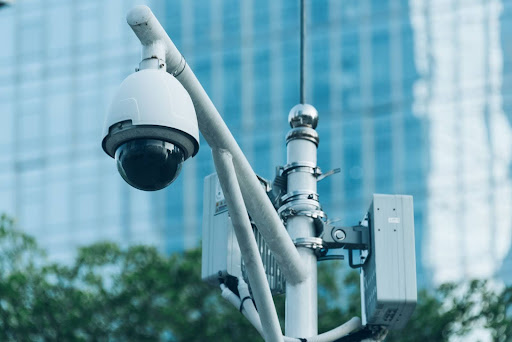
Modern site managers can better-address common threats and overcome the challenges of legacy CCTV operations by adopting AI-powered construction site security cameras. AI security cameras use machine learning and computer vision to analyse video feeds in real-time, enabling operators to detect threats and anomalous activities automatically, as well as engage instant incident responses.
AI cameras can be used to observe high-risk areas at all times, with systems programmed to instantly warn leaders of potential threats via SMS or email; they can also be linked to wider devices like access systems and sensors and used to trigger automated security responses.
The key capabilities of AI security cameras include:
-
Real-time intrusion detection: AI video analytics software can distinguish between humans, vehicles and wildlife to identify unauthorised access events. Operators can set unique rules to warn of intrusions at specific locations and high-risk times of day.
-
Behavioural analytics: AI cameras can analyse and understand movement patterns to identify suspicious activities like loitering, the presence of unknown vehicles and acts of aggression, helping operators to spot the warning signs of threats proactively.
-
PPE compliance monitoring: Systems can use object detection AI to identify assets like helmets, vests and safety glasses, enabling site managers to check that all staff are wearing appropriate PPE across the site and automatically warning of violations.
-
False alarm filtering: AI false alarm filtering software can automatically distinguish between innocuous events like animal activity and real threats like trespassing and vandalism to help reduce issues with alert fatigue that can lead to overlooked threats.
Practical use cases for AI construction site cameras
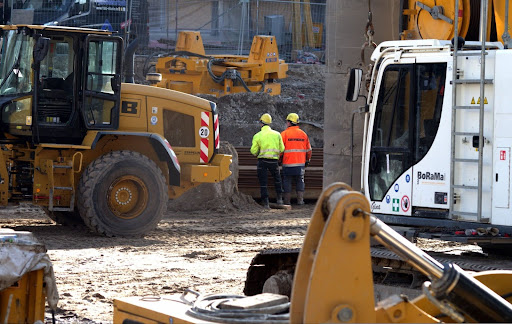
When connected to a cloud-based management system, AI cameras installed around the site can be managed and viewed remotely from any secure smart device. In practice, this allows operators to remain informed of risks and observe key operations from anywhere at any time.
Below are some examples of practical use cases for AI-powered security camera systems
Perimeter protection
AI cameras positioned to cover perimeter fences and entry points can autonomously detect unknown vehicles, loiterers and unauthorised access attempts. If a threat is identified, alerts can be sent to operators warning of the type of event and containing footage for their review.
High-value asset monitoring
Cameras can use object detection AI to continuously monitor specific assets and instantly warn operators if the object is moved. Site managers can set unique parameters to support site-specific workflows, e.g. alerts are sent if an asset is not returned within a set timeframe.
Defect tracking
AI cameras can be programmed to monitor heavy machinery and identify signs of damage or defects. System data can be used to both identify signs of tampering and vandalism, as well as perform proactive maintenance to help reduce machine downtime and replacement costs.
Hazard management
Cameras with AI-powered analytics can identify emerging occupational hazards in real-time, enabling managers to address slips, trips, falls and equipment misuse swiftly to safeguard workers and minimise costs associated with downtime, absences and compensation claims.
Proximity monitoring
AI cameras can be configured to monitor virtual danger zones around high-risk equipment and work areas. Operators can program systems to trigger alarms and send real-time alerts in response to unauthorised persons or workers without required PPE entering these zones.
Final thoughts
With professionals in some areas facing an almost 30% rise in material theft and as many as 60% of construction companies having experienced theft or vandalism in recent years, many operators may be considering ways to enhance and optimise existing security measures.
AI cameras provide a practical, proactive and forward-thinking way to both address common security risks and improve site-wide efficiency, helping to ensure operators are well-informed of threats and able to investigate suspicious and dangerous activities remotely at any time.